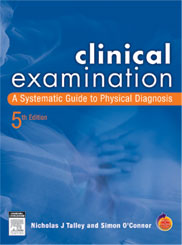
 Clinical Examination - A Systemic Guide to Physical Diagnosis, aka 'Talley
O'Conner'
Clinical Examination - A Systemic Guide to Physical Diagnosis, aka 'Talley
O'Conner'
Medicine Book Reviews
(Book reviews are contributed by students and are not necessary reflective of the site creator's opinions)
Clinical Examination - A Systemic Guide to Physical Diagnosis, aka 'Talley
O'Conner'
'This book is quite a staple for medical students. Physical examination is described very clearly in this book, and is relatively easy reading. The only drawback is the lack of colour and the restricted number of photographs.'
'Bare essentials recommended: Talley O Connor. I have a friend who survived on that alone, but she lives in school and thus used the Kumar and Clark from the library when needed. She also supplements with the internet like www.emedicine.com'
'This book covers well the aspects of physical examination and also supplies basic diagnostic paradigms to certain systems. There’s probably enough in here that you’ll never need another physical examination book, (if you can remember it all) and some pple I know still use it all the way up to MRCP. Its strengths are its organisation and depth of content, but it tends to ramble a bit here and there.'
'I found this book terribly boring but unfortunately there is no better alternative to this book. However, at the end of each chapter, there is kind of a summary which is pretty good. I think the most important is to devise your own physical examination sequence based on 1) what tutors teach and 2) what the book states and just stick to that ... you'll realise that talley gives certain steps in physical examination which are unnecessary. For that, your tutors will help you with it.'
'A definite must-have! It’s got the basics for history-taking and physical exam. Useful in e-clinics and also in Medicine posting.'
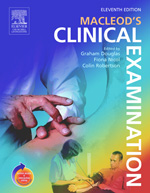 Clinical Examination, aka 'MaCleod's'
'This book is for those who need more pictures to guide them through physical examination. It surpasses Talley by having really useful photographs, but has less information.'
 Look and Proceed, by Dr Derrick Aw
'This book is by one of our local dermatologists, and it covers basic physical examination as well as signs you should look out for in various conditions. Useful after you have mastered your basics.'
'This book isn’t half bad, and has the advantage of being written in a local context. On the other hand, if you’ve been reading your talley o conner, this book might come across being mildly redundant.'
'This book is useful for the pre-MBBS preparations, as it is concise, and has the most common short cases, unlike Baliga which is a little overwhelming the night before Medicine Shorts'
 An Introduction to Symptoms and Signs of Clinical Medicine
'This is a lesser-used book, but I still found it useful because it went though the common symptoms and then listed out the important differentials to consider in each case.'
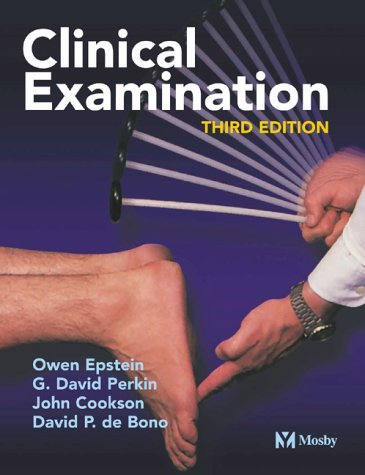 Clinical Examination
No reviews yet
 Clinical Medicine, aka 'Kumar and Clark'
'Most medical students here end up buying this, and it is indeed well written. In comparison with Davidson's, it has a little more information.'
'After comparing Davidson's with Kumar and Clark, I decided to buy Kumar and Clark in the end as I was more comfortable with the easy to understand style. However, I did not really have time to use it in the medicine posting haha =)'
'Very extensive reading. Good as a reference for writeups and to know the different conditions in greater detail.'
 Principles and Practice of Medicine, aka 'Davidson's'
'Davidson's has more flowcharts and diagrams than Kumar and Clarke, and is also an easy read.'
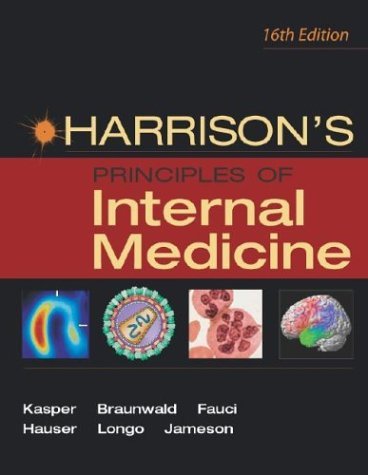 Internal Medicine, aka 'Harrison's'
'Harrison's is a great text, and should (eventually) be part of every medical student's collection. The only problem is that it is too voluminous for us to stomach. Probably should be used for reference and not for mugging.'
'Harrison’s is a huge book… and I honestly doubt if anyone alive has ever actually read it from end to end… Having said that, it is written in well flowing prose, and is nicely organised, so it makes for easy remembering. An excellent reference text.'
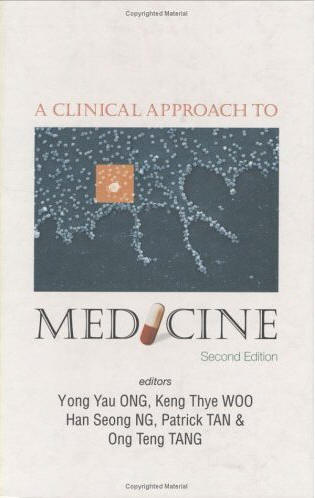 A Clinical Approach to Medicine (known as 'the SGH Book')
'This book is very useful as it discusses diseases with a local context. The only problem is that the formatting makes it a little hard to read for the unmotivated'
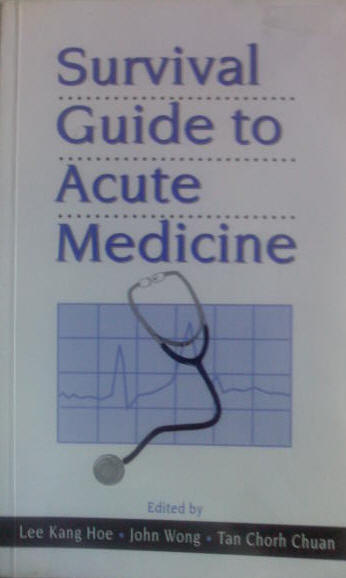 Survival Guide to Acute Medicine
'This book becomes more useful during M5, especially for the finals!'
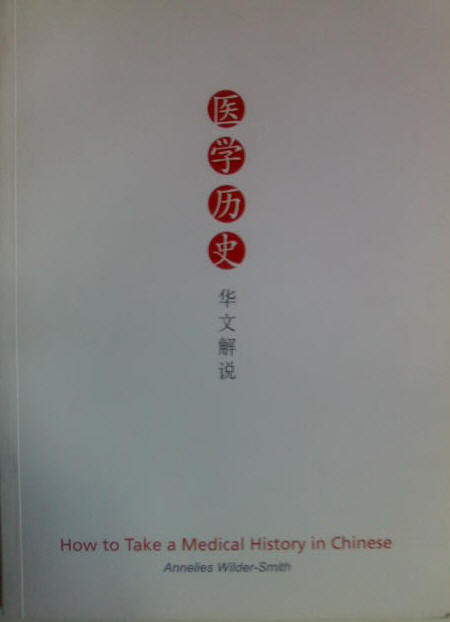 How to take a Medical History In Chinese
'Wriiten by one of our doctors, this book will come in handy if you are interested in learning more medical terms in mandarin'
 Oxford Handbook Clinical Medicine
'I bought this book, partly due to peer pressure, and also partly due to the desire to have a small pocketbook that I can keep in my coat pocket, for easy reference. However, I didn't get to use the book much in the end. The very concise writing style of the book makes studying from it highly challenging, and the small font will probably cause your eyesight to deteriorate after long periods of reading without rest.'
'For use in wards. Nuff said.'
'Very useful and a must-get! It’s handy and has a lot of information even though it seems so small. Good to bring around if you like reference material in the wards.'
 Churchill Handbook of Differential Diagnosis
'I found this book really useful because it lists all the differential diagnoses for many common signs and symptoms. The book also has points in history taking, physical examination and investigations that have to be excluded and included for the diagnosis.'
'Not absolutely essential but its a good book to have if you can spare the cash. Helps you formulate your differential diagnosis in case writeups.'
 250 Cases in Clinical Medicine, aka 'Baliga'
'This book was intended for the postgraduate, but being the kiasu medical students that we are, our greed for information knows no bounds. This book covers the 250 most common conditions and possible questions that the examiners will ask.'
'It’s a nice text if you just want to find out things about a particular condition. On the other hand, between oxford, talley and harrison’s, you really don’t need this book.'
'This provides more high-level information about the different conditions and can be useful. Recommended by seniors.'
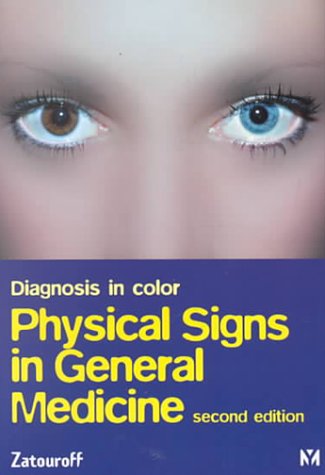 Diagnosis in Colour - Physical Signs in General Medicine
'A rather costly, but worthwhile investment. A picture paints a thousand words, having this book as a companion to studying medicine makes recall easier.'
 Chest X-Ray Made Easy
'This book teaches the basics of reading a Chest X-Ray, as well as reasonable examples. Not the best book for radiology, but a useful primer.'
 The ECG Made Easy
'This is a good primer for ECG. It is a really thin book, so can be read in a sitting or two.'
 The ECG in Practice
'This is the 'level 2' advancement of 'The ECG Made Easy'. Recommended for those who are interested in knowing more about the ECG.'
 150 ECG Problems
'After reading up so much about ECGs, how about putting yourself to the test? This book has several problems (solutions included!) to test how much you really know about the ECG.'